

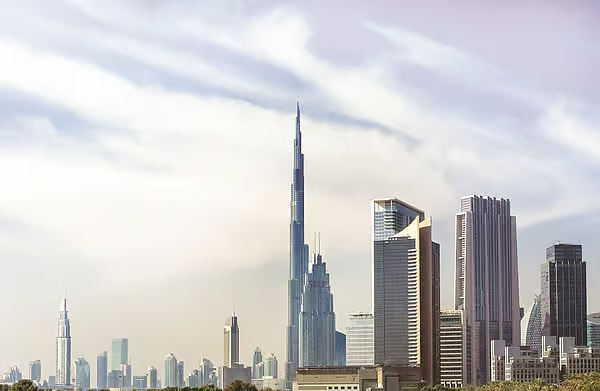

Dubai’s residential property market showed signs of cooling in July 2026, with apartment values declining across several major communities. According to the ValuStrat Price Index, Dubai apartment prices fell 0.2% month-on-month and were 4.2% lower than a year earlier, bringing the citywide weighted average apartment value to around Dh1.79 million.
Some of Dubai’s most recognised locations recorded the sharpest annual declines. Burj Khalifa apartments fell 19% year-on-year, making it the biggest decline among the communities tracked. Jumeirah Beach Residence followed with a 15.1% decline, while Town Square recorded an 8.4% drop.
The decline could create opportunities for buyers who have been waiting for more attractive entry prices. However, investors should look beyond headline price reductions and consider factors such as location, rental demand, service charges, property quality and potential resale value before making a decision.
Not every Dubai community experienced falling prices. Dubai Silicon Oasis recorded a 1.3% monthly increase and led annual apartment growth at 6%, followed by Dubai Sports City at 5.4% and Al Quoz Fourth at 5%. This highlights the importance of choosing the right location rather than viewing the Dubai market as one uniform segment.
The market is also seeing a shift in buyer behaviour. Ready-home transactions increased 11.4% month-on-month to 3,546 transactions, while off-plan registrations declined 1.1% from June and were 45.3% lower year-on-year. Despite this shift, off-plan properties still represented 72.8% of residential sales in July.
For buyers, the current market may offer more negotiating power, particularly in communities where prices have declined significantly. Prime areas such as Burj Khalifa and JBR remain highly desirable because of their locations, amenities and established rental markets, but investors should assess whether the current price reflects genuine value.
ValuStrat also noted that marginal monthly declines suggest Dubai’s residential market may be moving towards greater stability. While July’s figures indicate a cooling phase, they do not necessarily point to a broad market collapse. Instead, the data suggests that buyers may need to become more selective as the market enters a more balanced phase.
For investors considering Dubai property in 2026, the current period could therefore be an opportunity to identify well-priced ready homes, negotiate better deals and focus on communities with sustainable rental and resale demand. The key will be selecting properties based on long-term fundamentals rather than simply chasing the biggest price decline.


Leave a Reply